The Executive Silhouette: Formal Dressing Strategies for Shorter Statures
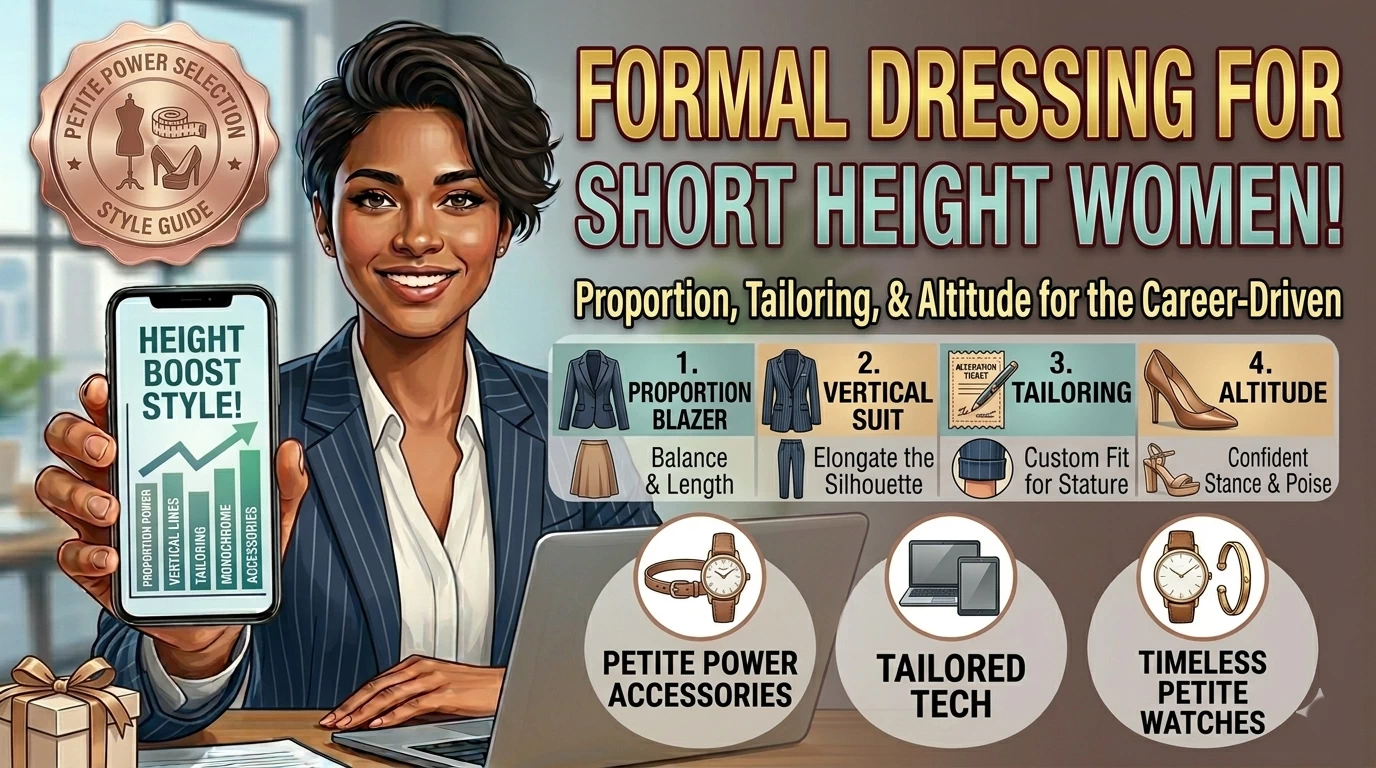
Formal dressing for short height women is all about creating a vertical silhouette that enhances height and confidence. With the right styling techniques, you can look taller instantly.
When navigating the world of formal and professional attire, the primary objective for a shorter frame is to master the art of verticality. Formal wear often involves heavier fabrics and structured tailoring, which can easily overwhelm a petite figure if not managed correctly. The secret lies in creating a “columnar” effect that directs the eye upward, ensuring that your clothing enhances your presence rather than diminishing it.
Architectural Tailoring: The High-Rise Foundation
In a formal setting, the structure of your garments acts as the scaffolding for your silhouette. The most powerful tool in your arsenal is the high-waisted trouser or skirt.
1. Re-Proportioning the Torso and Legs
By selecting bottoms that sit at the narrowest part of your waist (typically above the navel), you visually re-allocate your body’s proportions. This creates the illusion that your legs begin higher up, instantly adding several inches to your perceived height.
The Tailoring Rule: Ensure your trousers are hemmed to just graze the floor when wearing your preferred formal heels. This “hidden heel” trick is a classic way to gain physical height while maintaining a seamless vertical line.
2. The Straight-Leg Advantage
Avoid wide-leg “palazzo” pants for formal events, as the excess fabric can make a shorter frame look wider rather than taller. Instead, opt for a slim-straight or cigarette cut. These styles follow the natural line of the leg without adding horizontal bulk.
The Power of the Monochromatic Suit
Color is a powerful psychological and visual tool. For formal occasions—be it a board meeting, a gala, or a professional conference—monochromatic dressing is the most effective way to elongate your frame.
1. Eliminating Visual Breaks
When you wear a contrasting blazer and trouser (e.g., a navy jacket with grey pants), you create a horizontal line at the hip. This “cuts” your silhouette into two blocks. By wearing a full suit in a single shade—such as deep charcoal, midnight navy, or forest green—you remove those boundaries. The eye travels from your shoulders to your shoes in one fluid motion.
2. Pinstripes: The Vertical Guide
If you prefer patterns, pinstripes are your best friend. The subtle vertical lines act as a roadmap for the eye, guiding it upward and creating a leaner, taller appearance.
Essential Formal Staples for Shorter Frames
The Precision Trousers: High-Rise Straight-Leg
For a formal environment, you need trousers that offer structure and a perfect drape. The Kasper Women’s High-Rise Straight-Leg Trousers are engineered for this exact purpose. The high-waisted design lengthens the lower body, while the straight-leg cut provides a professional finish that avoids the “drowning” effect of wider styles.
The Elongating Layer: Tailored Blazers
A blazer should be the “frame” for your outfit. For shorter women, a cropped or fitted blazer that hits just at the hip bone is ideal. Avoid “oversized” or “boyfriend” blazers, as the extra length can make your legs look shorter by comparison.
The Anne Klein Women’s Compression Knit Dress is an excellent alternative to a two-piece suit. As a single-piece garment, it eliminates the “waist break” entirely. The compression fabric provides a tailored, high-end look that holds its shape, ensuring you maintain a sleek, vertical silhouette throughout the day.
The Formal Proportion Checklist
| Feature | The “Taller” Choice | The “Shorter” Choice |
| Waistline | High-Rise (Above Navel) | Low-Rise / Hip-slung |
| Jacket Length | Cropped or Hip-length | Mid-thigh or Oversized |
| Neckline | V-Neck or Deep Scoop | High Crew Neck / Boat Neck |
| Footwear | Pointed-toe Pumps | Round-toe or Ankle Straps |
| Pattern | Pinstripes / Solid | Large Checks / Horizontal Stripes |
FAQ
Can I wear a midi-length skirt for formal events?
What kind of footwear is best for formal height?
Should I avoid bulky accessories?
Final Thoughts
Formal dressing for a shorter stature is not about following rigid rules, but about understanding visual geometry. By prioritizing high-waisted cuts, monochromatic columns of color, and tailored fits, you command the room with a silhouette that feels both powerful and elongated.
If you would like, I can help you find specific petite-sized blazer brands or suggest footwear options tailored to your specific professional needs. What would you like to explore next?