Home Remedies for Age Spots: Fade Dark Spots Naturally

  • April 22, 2026

Targeted Home Remedies for Age Spots: Fade Dark Spots Naturally

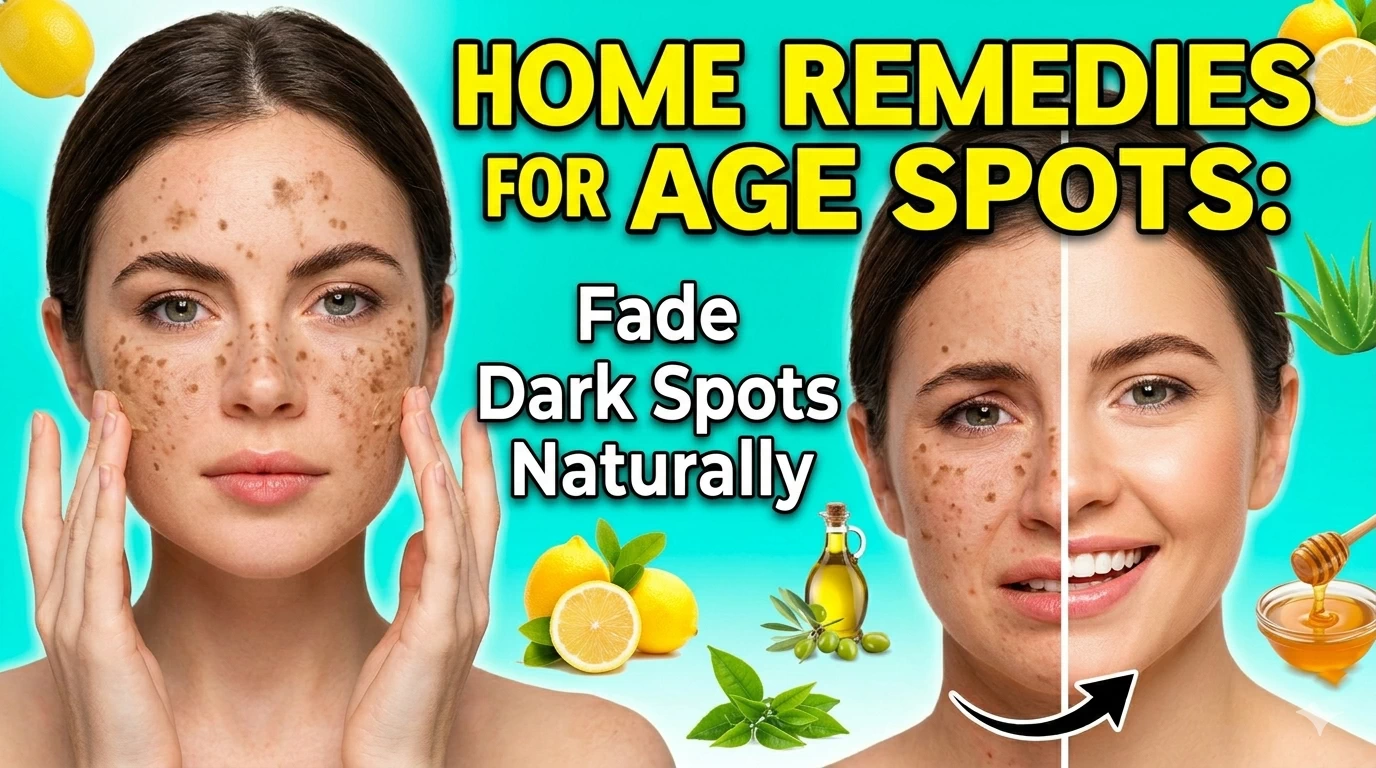
Home remedies for age spots are one of the safest and most effective ways to fade dark spots naturally without expensive treatments. Age spots—also known as liver spots—appear due to excess melanin caused by sun exposure. With the right natural ingredients and consistent care, you can visibly reduce pigmentation and achieve a more even skin tone at home.

Age spots—also known as liver spots or solar lentigines—are flat, brown, or black spots that typically appear on areas of the face most exposed to the sun. They are caused by an overproduction of melanin, often due to years of UV exposure.

While these spots are usually harmless, many people seek to lighten them for a more even skin tone. You don’t always need a clinical laser treatment to see progress; several botanical ingredients contain natural “lighteners” that can effectively fade these marks over time.

1. The Vitamin C Powerhouse: Fresh Lemon Juice

Lemon juice is a natural bleaching agent thanks to its high concentration of citric acid and Vitamin C.

  • The Remedy: Dab fresh lemon juice directly onto the age spots using a cotton swab. Leave it for 15 minutes, then rinse with lukewarm water.

  • Why it works: The citric acid acts as a gentle Alpha Hydroxy Acid (AHA) to accelerate cell turnover, while Vitamin C inhibits the enzyme responsible for melanin production.

  • Caution: Lemon juice increases sun sensitivity. Always apply SPF 30+ the following day.

2. The Fermented Fix: Apple Cider Vinegar (ACV)

ACV contains acetic acid and malic acid, which are excellent for chemical exfoliation.

  • The Remedy: Mix equal parts ACV and water. Apply the solution to the spots and leave it for 5–10 minutes before rinsing.

  • Why it works: The organic acids in ACV help to chemically “peel” the darkened surface cells, gradually revealing lighter skin underneath.

3. The Enzyme Resurfacer: Papaya Pulp

Papaya contains papain, a proteolytic enzyme that breaks down the proteins that hold dead skin cells together.

  • The Remedy: Mash a small piece of ripe papaya and apply the paste to the age spots. Leave it on for 20 minutes before washing off.

  • Why it works: Unlike harsh scrubs, papain provides a biological exfoliation that is highly effective at fading surface pigmentation without irritating the surrounding healthy skin.

4. The Lactic Lightener: Buttermilk or Yogurt

Dairy products are rich in lactic acid, one of the gentlest and most hydrating exfoliating acids available.

  • The Remedy: Soak a cotton ball in buttermilk and dab it onto your face. Let it sit for 15 minutes.

  • Why it works: Lactic acid helps to slowly dissolve the concentrated pigment in age spots while simultaneously strengthening the skin’s moisture barrier.

5. The Botanical Guard: Aloe Vera

Aloe vera contains aloesin, a compound found to have skin-lightening properties.

  • The Remedy: Apply fresh aloe vera gel directly from the leaf to the spots twice daily. Do not rinse; let it absorb into the skin.

  • The Science: Aloesin helps to regulate melanin production. Consistent use can prevent the spots from darkening further and help them fade over several months.

The Age Spot Prevention & Treatment Checklist

Daily HabitRole in Treatment
Broad-Spectrum SPFThe #1 way to prevent spots from getting darker.
Antioxidant SerumProtects cells from the UV damage that causes spots.
Consistent HydrationSpeeds up the skin’s natural healing and renewal process.
Nightly RepairUse oils like Rosehip to help fade marks while you sleep.

Frequently Asked Questions (FAQ)

How long does it take to fade age spots naturally?

Patience is key. Because age spots are located in the deeper layers of the epidermis, it typically takes 6 to 12 weeks of consistent treatment to see a visible reduction in color.

Can I use these remedies if I have sensitive skin?

If you have sensitive skin, avoid lemon juice and apple cider vinegar, as the acidity can be irritating. Instead, opt for Aloe Vera or Buttermilk, which are much gentler on the skin barrier.

Should I see a doctor about age spots?

While most age spots are harmless, you should see a dermatologist if a spot changes color rapidly, becomes raised, has an irregular border, or starts to itch or bleed.
Summary: Fading age spots at home is a marathon, not a sprint. By using natural acids like Citric and Lactic to exfoliate, and botanical lighteners like Aloesin, you can gradually restore an even, youthful complexion. Always remember: any progress made with home remedies can be undone in a single day without proper sun protection.

  • by
    Nila7
  • April 22, 2026

Leave A Reply

Your email address will not be published. Required fields are marked *

You May Also Like

Time-Tested Home Remedies for Facial Wrinkles: Smooth Your Skin Naturally Home remedies for wrinkles are a natural and effective way...
The Pure Glow: Essential Natural Beauty Tips for a Radiant Natural skincare routine is the foundation of healthy, glowing skin....
Professional At-Home Skincare: How to Achieve a Studio Glow from Your Vanity At home skincare routine is the key to...
Fall Skincare Transition: How to Reset and Protect Your Glow Autumn skincare routine is essential to protect your skin from...