7 Incredible Benefits of Eating Egg for Skin Health (2026 Science Guide)
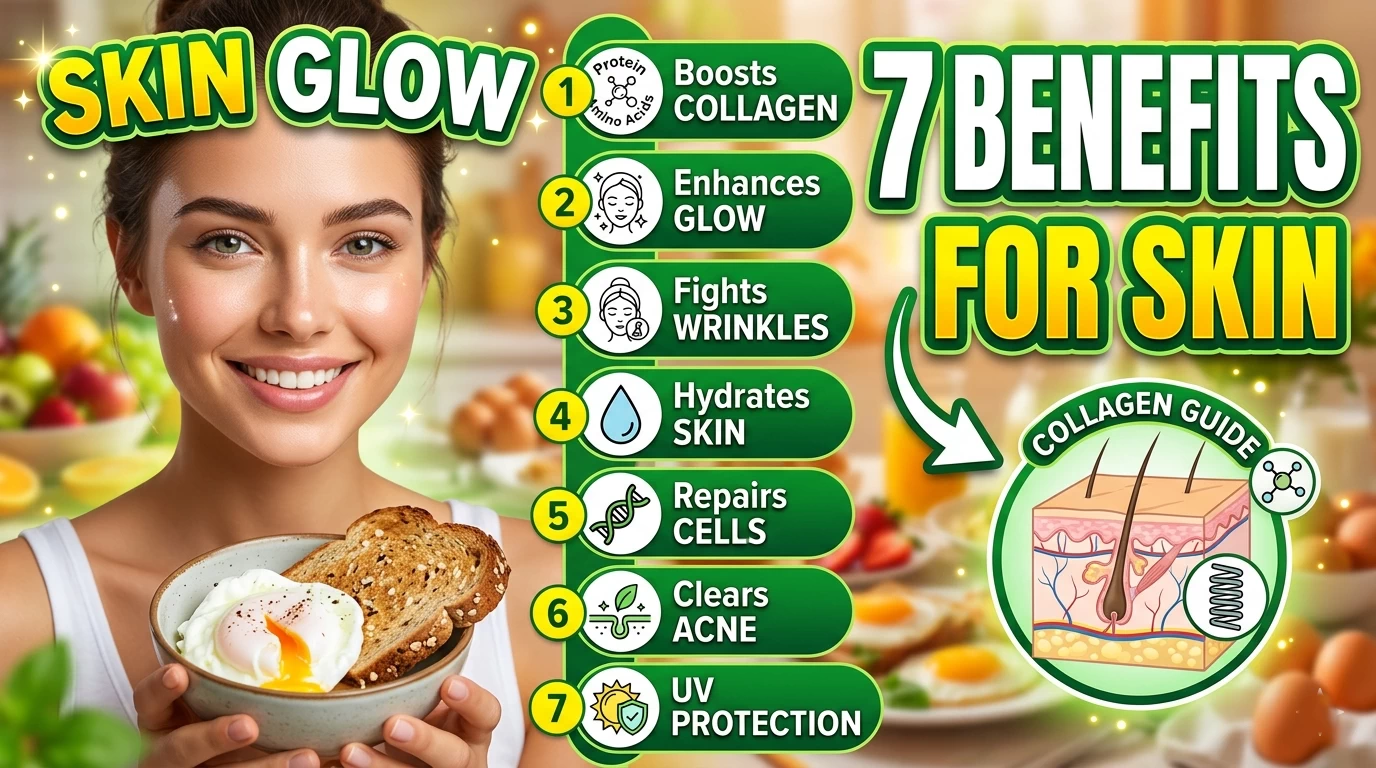
When we think about skincare, we usually think about serums and moisturizers. However, true radiance starts from within. While many superfoods get the spotlight, the humble egg is quietly one of the most potent “beauty foods” available today. The benefits of eating egg for skin range from boosting collagen production to protecting your cells from oxidative stress.
In this guide, we will explore why eggs are considered a “complete protein” for your complexion and how the specific vitamins found in the yolk and white work together to repair and rejuvenate your skin cells.
Before we dive into the dermatology of eggs, if you’re looking for ways to incorporate them into your routine, check out our recent guide on . For those focused on overall health, don’t miss our and our .
The Nutrient Profile: Why Eggs Are a Skincare Powerhouse
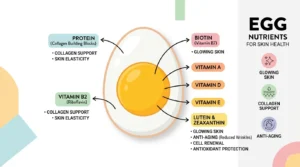
ggs aren’t just protein; they are a goldmine of micronutrients that are bioavailable, meaning your body (and skin) can absorb them easily.
Key “Beauty” Nutrients in Eggs
5 Science-Backed Benefits of Eating Egg for Skin
1. Natural Collagen Production
Your skin is made of protein, specifically collagen and elastin. Eggs contain all nine essential amino acids, particularly proline and glycine, which are the building blocks your body needs to produce its own collagen. Regular consumption helps maintain skin firmness and reduces the appearance of fine lines.
2. Deep Hydration and Elasticity
Research has shown that the antioxidants lutein and zeaxanthin, found in egg yolks, can significantly increase skin hydration. These carotenoids help protect the skin from blue light damage and improve the lipid (oil) content in your skin, leading to a natural “glow” that topical creams can’t replicate.
3. Fighting Free Radicals with Selenium
One of the major benefits of eating egg for skin is its high selenium content. Selenium is a powerful antioxidant that protects skin cells from free radical damage caused by pollution and UV rays. Think of it as an internal sunscreen that supports your skin’s natural defenses.
4. Biotin for Barrier Health
Biotin (Vitamin B7) is often sold as a supplement for hair, skin, and nails. However, getting it from whole foods like eggs is superior. Biotin helps your body process fats, which are essential for maintaining a strong skin barrier. A weak barrier leads to redness, flakiness, and sensitivity.
5. Zinc for Clearer Skin
If you struggle with hormonal acne or slow-healing blemishes, the zinc in egg yolks is your best friend. Zinc regulates oil production and has anti-inflammatory properties that help calm redness and speed up the wound-healing process of the skin.
Expert Tips for Maximizing Skin Benefits
As a content creator focused on wellness, I recommend these three “Golden Rules” for eating eggs for beauty:
Don’t Skip the Yolk: While many people eat egg whites for weight loss, 90% of the skin-boosting nutrients (Lutein, Zinc, and Vitamin E) are located in the yolk.
Cook Your Egg Whites: Raw egg whites contain avidin, a protein that blocks biotin absorption. Cooking the whites neutralizes avidin, ensuring your skin gets all the Biotin it needs.
Pair with Vitamin C: To maximize collagen synthesis, eat your eggs with a side of Vitamin C (like sliced bell peppers or a squeeze of lemon). Vitamin C is the “glue” that helps amino acids turn into collagen.
FAQ
Does eating eggs cause acne?
How many eggs should I eat a day for glowing skin?
Can eggs help with skin tightening?
Are egg whites or yolks better for skin?
Final Thoughts: The Glow Starts Here
The benefits of eating egg for skin are undeniable. By shifting your focus from just applying products to consuming nutrient-dense foods, you’ll notice a significant improvement in your skin’s texture and resilience within 4 to 6 weeks.
Have you noticed a difference in your skin since adding more eggs to your diet? Let me know in the comments!