The Science of Style: Finding the Perfect Clothing Colors for Your Skin Tone
Choosing the right colors for your wardrobe isn’t just about fashion; it’s about color theory. The right shades can illuminate your face, while the wrong ones can make you appear washed out or tired. The pain many people face is a closet full of clothes that don’t quite “work” for reasons they can’t name. (Pain) The shift in 2026 is toward personalized color analysis, moving away from “what’s trending” toward what harmonizes with your biology. (Shift) The solution is understanding your skin’s undertone—the permanent color beneath the surface of your skin. (Solution)
1. How to Identify Your Undertone
Your surface skin tone can change with the sun, but your undertone stays the same. To find yours, perform these three simple tests in natural light:
The Vein Test: Look at the veins on your wrist. If they look blue or purple, you have a cool undertone. If they look green, you have a warm undertone. If you see both or can’t tell, you are likely neutral.
The Jewelry Test: Does silver make your skin look radiant and clear? You’re likely cool-toned. Does gold bring out a healthy glow? You’re likely warm-toned.
The White Paper Test: Hold a piece of pure white paper next to your bare face. If your skin looks pink or rosy, you are cool. If it looks yellow or peachy, you are warm.
2. The Color Match Chart
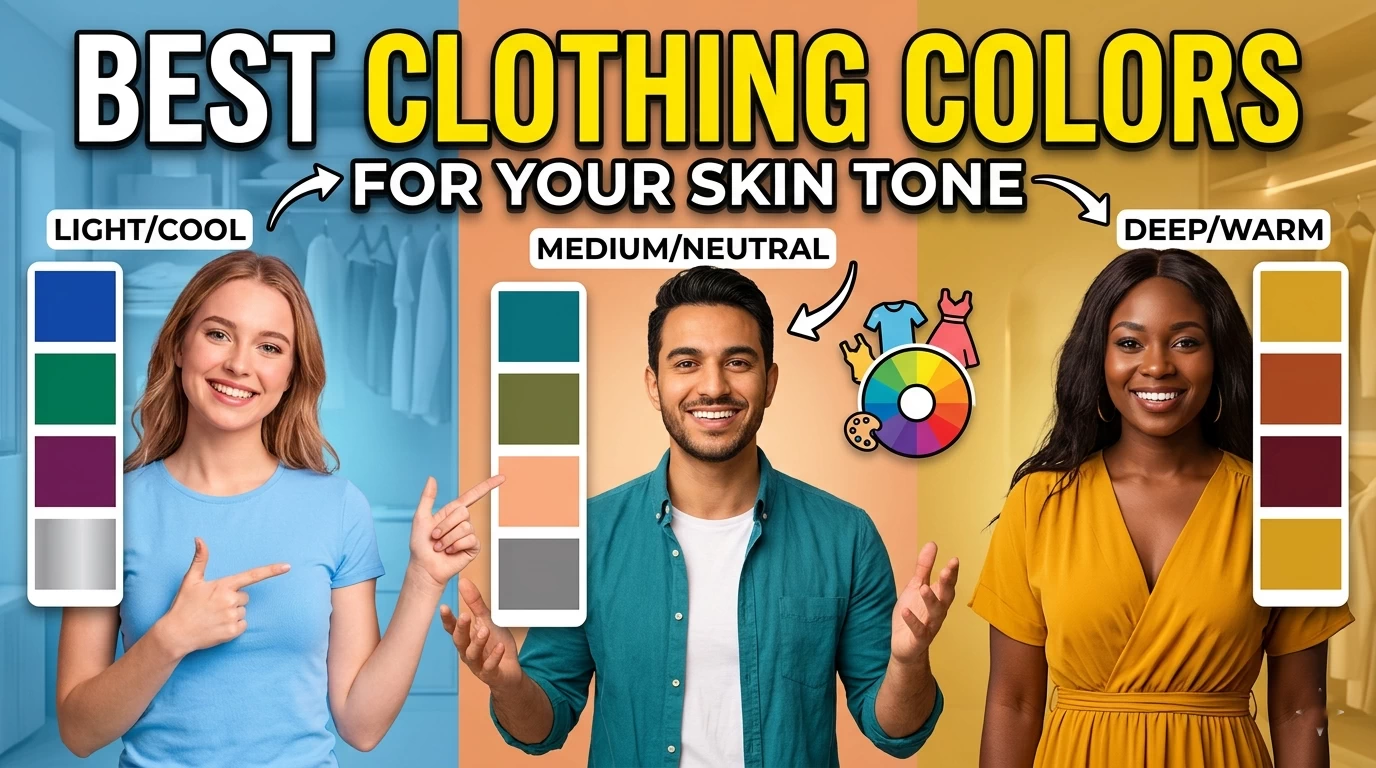
Once you know your undertone, use this chart to select the most flattering hues for your wardrobe.
| Undertone | Best Primary Colors | Best Neutrals | Colors to Avoid |
| Cool | Emerald, Sapphire, Royal Blue, Bright Pink, Lavender | Pure White, Navy, Charcoal, Silver | Orange, Mustard Yellow, Tomato Red |
| Warm | Olive Green, Honey Gold, Terracotta, Coral, Peach | Cream, Camel, Chocolate Brown, Gold | Icy Blue, Stark White, Magenta |
| Neutral | Jade, Dusty Rose, Teal, Plum, Off-White | Soft Grey, Taupe, Espresso | Neon Brights, High-Contrast Black/White |
3. Seasonal Color Analysis: Finding Your Depth
Beyond undertones, your depth (light vs. dark) helps categorize you into a “season.”
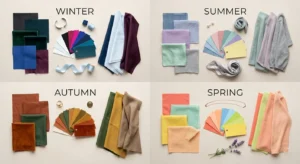
The Cool Seasons
Winter: High contrast (e.g., dark hair, pale skin). You look best in bold jewel tones and stark black or white.
Summer: Low contrast (e.g., blonde hair, light eyes). You shine in muted pastels and soft cool greys.
The Warm Seasons
Autumn: Rich, earthy coloring. Your power colors are burnt orange, mustard, and deep forest green.
Spring: Light, fresh coloring. You look radiant in warm corals, aqua, and peachy pinks.
Essential Tools for Your Style Journey
To truly see how colors interact with your skin, you need high-fidelity lighting and a clear reflection in your dressing area.
Precision Lighting for Your Vanity
Standard indoor bulbs are often too yellow or too blue, which distorts how clothes look on you. The GIFTMAX Half Moon LED Lamp provides a high Color Rendering Index (CRI), ensuring the colors you see in the mirror are exactly what people see in daylight.
Professional Wardrobe Management
Organizing your new color palette requires a workspace that keeps your style “vision board” and accessories in order. A sleek, modern desk like the OmySalon Matte Black Desk offers the minimalist aesthetic needed for a clean, focused dressing or styling room.
Frequently Asked Questions (FAQ)
Can I wear black if I have a warm undertone?
Does my eye color matter?
What is the "safest" color for everyone?
Final Thoughts
Mastering your skin tone is about enhancing your natural beauty, not limiting your options. When you wear colors that harmonize with your undertones, you appear more vibrant and confident. Start by swapping one “unflattering” neutral for your power shade, and watch how it transforms your look.
If you like, I can pull together a curated clothing list based on your specific “season” (e.g., Winter or Autumn) with direct links to pieces that match your palette. Do you want me to do that?