Soothing the Flare: Gentle Home Remedies for Rosacea
Rosacea is a chronic inflammatory skin condition that typically manifests as persistent redness, visible blood vessels, and sometimes small, red, pus-filled bumps on the face. While the exact cause is unknown, flare-ups are often triggered by environmental stressors, heat, and a compromised skin barrier.
Managing rosacea at home is about cooling inflammation and fortifying the moisture barrier. Here is a professional guide to the most effective, calming home remedies to help manage redness and sensitivity.
For more beauty-related information Moisturizing but still dry? Learn about hidden skin barrier damage here
1. The Ultimate Cooler: Chilled Green Tea Compresses
Green tea is packed with polyphenols and epigallocatechin-3-gallate (EGCG), which possess potent anti-inflammatory and antioxidant properties.
The Remedy: Steep two green tea bags in hot water, then refrigerate the tea until it is cold. Soak a soft cloth in the tea and apply it to your face for 10 minutes.
Why it works: The cold temperature constricts dilated blood vessels, while the antioxidants work to neutralize the inflammation that causes “flushing.”
2. The Barrier Builder: Colloidal Oatmeal
Oatmeal contains avenanthramides—unique antioxidant and anti-inflammatory compounds that soothe itchy, irritated skin.
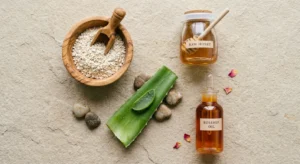
The Remedy: Finely grind organic rolled oats into a powder (or purchase colloidal oatmeal). Mix with a little water to form a paste and apply to the face for 15 minutes.
Why it works: It acts as a protective film over the skin, reducing transepidermal water loss and significantly calming the “burning” sensation often associated with rosacea.
3. The Natural Hydrator: Raw Honey
Honey is a natural humectant and antimicrobial agent, which is particularly helpful if your rosacea includes acne-like bumps.
The Remedy: Apply a thin layer of raw Manuka honey to damp skin. Leave it on for 20 minutes before gently rinsing with lukewarm water.
Why it works: Honey helps the skin retain moisture without clogging pores and reduces the presence of microbes that can exacerbate inflammatory responses.
4. The Anti-Redness Botanical: Aloe Vera
Aloe vera contains salicylic acid and magnesium lactate, which help reduce pain and redness.
The Remedy: Apply pure aloe vera gel (ideally fresh from the leaf) to the face twice daily.
The Science: It provides an instant cooling effect and stimulates collagen production to help repair the thinned, sensitive skin often found in chronic rosacea patients.
5. The Gentle Oil: Rosehip Seed Oil
Many traditional oils are too heavy for rosacea, but rosehip is a “dry” oil that is high in essential fatty acids.
The Remedy: Massage 2–3 drops of organic rosehip oil into your skin as the final step of your evening routine.
Why it works: It is rich in Vitamin C and Vitamin A, which help strengthen the walls of fragile capillaries and improve overall skin resilience.
The Rosacea Trigger-Management Checklist
| Trigger Category | Strategy to Avoid Flares |
| Temperature | Use lukewarm water; avoid hot showers and saunas. |
| Diet | Limit spicy foods and extremely hot beverages. |
| Sunlight | Use a mineral-based (Zinc Oxide) SPF 30 every day. |
| Products | Avoid alcohol, fragrance, and harsh physical scrubs. |
Frequently Asked Questions (FAQ)
Can I use Apple Cider Vinegar for rosacea?
Is it okay to exfoliate with rosacea?
Why is my rosacea worse in the sun?
Summary: Managing rosacea at home requires a “less is more” approach. By focusing on cooling ingredients like Green Tea, protective barriers like Oatmeal, and avoiding known triggers, you can significantly reduce the frequency and intensity of flare-ups.