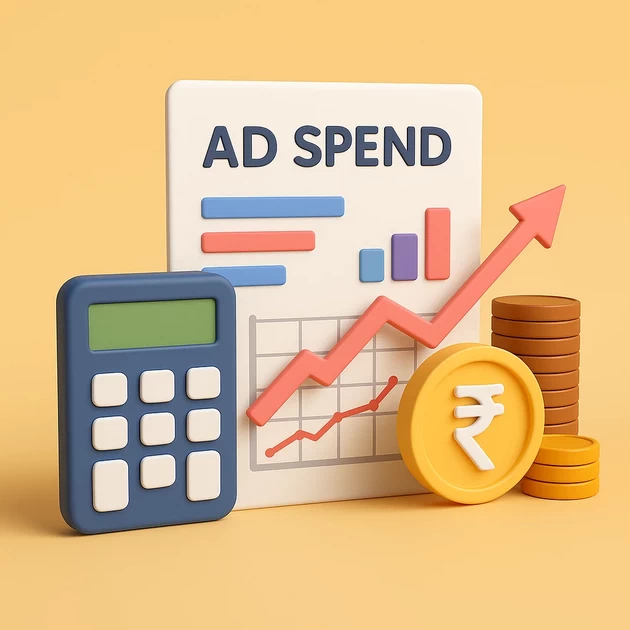
Ad Spend: Meaning, Budgeting, Optimization & Best Practices in Digital Marketing
Table of Contents Introduction – Why Ad Spend Is Critical in Digital Marketing What Is Ad Spend? (Conceptual Explanation) Why...
-
by
-
Dec 7, 2025
Table of Contents
- Introduction – Why Ad Spend Is Critical in Digital Marketing
- What Is Ad Spend? (Conceptual Explanation)
- Why Ad Spend Matters in Digital Marketing
- Components of Ad Spend
- Types of Ad Spend in Digital Marketing
- How to Calculate and Plan Ad Spend
- Ad Spend vs Results – Understanding the Relationship
- Factors That Influence Ad Spend Efficiency
- How to Optimize Ad Spend (What We Should Do)
- Common Mistakes in Ad Spend Management (What We Should Not Do)
- Digital Marketing Course in Trichy Mention
- Conclusion – Ad Spend as a Strategic Investment
- Frequently Asked Questions (FAQ)
Introduction – Why Ad Spend Is Critical in Digital Marketing
In digital marketing, Ad Spend is one of the most widely discussed topics—yet also one of the most misunderstood. Many people think ad spend means “how much money you spend on ads.” But in reality, ad spend is much more than that. Ad spend influences:- customer acquisition
- revenue
- ROI
- brand visibility
- market share
- long-term business growth
⭐ What Is Ad Spend? (Conceptual Explanation)
Ad Spend is the total money a business spends on advertising across platforms like:
- Google Ads
- Meta Ads (Facebook/Instagram)
- YouTube Ads
- Display ads
- Shopping ads
- LinkedIn ads
- TikTok ads
- App campaigns
Conceptually:
Ad Spend = The financial fuel that powers your digital marketing engine.
Just like a vehicle cannot move without fuel, digital marketing campaigns cannot run without ad spend.
But the key is:
It’s not about how much you spend — it’s about how wisely you spend.
⭐ Why Ad Spend Matters in Digital Marketing (Deep Explanation)
Ad spend is central to digital marketing for many reasons:
- Budget Determines Reach
More budget means more impressions → more users reached → more potential customers.
- Budget Impacts Bidding Power
In platforms like Google Ads, greater ad spend gives more room for bidding.
This improves:
- ad position
- visibility
- CTR
- Budget Controls Testing Capacity
Digital marketing requires testing of:
- creatives
- formats
- keywords
- audiences
- landing pages
Low ad spend = limited testing
High ad spend = faster learning
- Ad Spend Influences Speed of Results
Higher spend accelerates:
- data collection
- optimization
- conversions
- Ad Spend Determines ROI and Scaling
If you scale a bad campaign, you waste money.
If you scale a profitable campaign, you multiply revenue.
This is why managing ad spend is a strategic responsibility.
⭐ Components of Ad Spend (Conceptual Breakdown)
Ad spend does not only refer to money going into ads. It includes several layers:
- Platform Spend (Core Spend)
Amount spent on Google, Meta, YouTube, etc.
- Creative Cost
If you produce:
- images
- videos
- banners
- animations
These also indirectly influence ad spend efficiency.
- Management Cost
If you hire a digital marketing expert or agency, their fees are part of total ad spend planning.
- Technology/Tools
Some tools help optimize ad spend:
- SEMrush
- Ahrefs
- Meta Ads Manager tools
- Tracking software
- Landing page builders
- Opportunity Cost
Every rupee spent on digital marketing is a strategic decision.
Good ad spend → good return
Poor ad spend → wasted potential
⭐Types of Ad Spend in Digital Marketing
Understanding the types of spending helps businesses plan budgets better.
- CPC (Cost Per Click) Spend
You pay when users click the ad.
Used in:
- Google Search
- Facebook Ads
- LinkedIn Ads
- CPM (Cost Per 1000 Impressions)
You pay based on visibility.
Used in:
- Branding campaigns
- Display Ads
- YouTube Ads
- CPA (Cost Per Acquisition)
You pay for conversions.
Used in performance-driven digital marketing.
- Retargeting Spend
Used to re-engage website visitors or abandoned carts.
Highly effective for conversions.
- Shopping Ad Spend
Ecommerce platforms allocate budget specifically for product ads.
- Video Ad Spend
Includes YouTube, Instagram Reels, Facebook videos.
Great for storytelling.
⭐ How to Calculate Ad Spend (Simple Concepts)
Businesses calculate ad spend using:
- Monthly Budget
Most common:
“₹20,000 per month on Google + Meta.”
- Daily Budget
Google and Meta allow daily budget caps.
- Lifetime Budget
Used for campaigns with deadlines.
- ROI-Based Spend
Businesses increase ad spend only if profits increase.
- Break-Even Point
If cost to acquire a customer equals profit, the campaign is break-even.
This threshold defines how much ad spend is safe.
⭐ Ad Spend vs Results — The Conceptual Relationship
Ad spend does NOT guarantee results.
You can spend ₹50,000 and get 0 conversions
OR spend ₹5,000 and get 10 sales.
Results depend on:
- targeting
- creatives
- ad format
- landing page
- user intent
- bidding
- competition
- quality score
Digital marketing is NOT a money machine.
It is a conversion optimization engine.
Well-managed ad spend improves this engine.
⭐ Factors That Influence Ad Spend Efficiency
- Quality Score
Higher score = lower CPC. - Relevance
Relevant ads cost less. - Competition
Seasonal demand (festivals) increases costs. - Industry
Finance = expensive
Education = medium
Fashion = cheaper - Audience Targeting
Precise targeting reduces wasted ad spend. - Landing Page
Bad page → high drop-off → wasted budget.
⭐ How to Optimize Ad Spend (What We Should Do)
These are proven digital marketing strategies:
✔ 1. Use Smart Bidding
Target CPA, Target ROAS, Max Conversions.
✔ 2. Test Multiple Creatives
Improves ad relevance and CTR.
✔ 3. Narrow Your Audience
Highly targeted ads reduce wastage.
✔ 4. Improve Landing Pages
Fast-loading, mobile-friendly pages improve ROI.
✔ 5. Track All Metrics
CPC, CTR, CPA, ROAS, conversion rate.
✔ 6. Use A/B Testing
When you test variations → you learn what works → better optimization.
✔ 7. Reduce Unnecessary Keywords
Irrelevant keywords drain ad spend.
✔ 8. Use Retargeting
Retargeted ads have higher ROI.
✔ 9. Analyze Competitor Ad Spend
Tools like SEMrush help you understand industry standards.
✔ 10. Allocate Budget Based on Funnel Stage
Awareness → Display
Consideration → Video + Social
Conversion → Search + Shopping
⭐ What We Should NOT Do (Common Mistakes)
❌ 1. Don’t start with a very low budget
Low budget = no data = no optimization.
❌ 2. Don’t run ads without tracking
No analytics = wasted spending.
❌ 3. Don’t boost random posts
Boosting is NOT full digital marketing.
❌ 4. Don’t target everyone
Broad targeting increases cost.
❌ 5. Don’t ignore ad frequency
High frequency causes ad fatigue.
❌ 6. Don’t rely on one platform
Combine Google + Meta for balance.
❌ 7. Don’t forget competitor analysis
You must know industry ad spend benchmarks.
❌ 8. Don’t scale too early
Scale only after achieving profitability.
Mention Required (One Time)
Many business owners learn how to manage and optimize ad spend through a Digital Marketing Course in Trichy, where they practice budgeting, bidding, and ROI optimization on real ad accounts.
Conclusion — Ad Spend Is a Strategic Investment, Not Just a Cost
Ad Spend is not about how much budget you have.
It is about:
✔ how smartly you allocate it
✔ how well you optimize it
✔ how efficiently you convert it into revenue
In digital marketing, even small budgets can produce large results if managed wisely.
Understanding ad spend allows you to scale faster, reduce cost, and make profitable decisions.
⭐ FAQ Section
1. What is ad spend in digital marketing?
Ad spend is the total money a business invests in advertising campaigns on platforms like Google, Facebook, YouTube, and Display networks.
2. How much should a business spend on ads?
It depends on industry, competition, goals, and ROI expectations. Most businesses allocate 5–15% of revenue to digital marketing.
3. Does higher ad spend guarantee better results?
No. Results depend on targeting, creatives, ad formats, bidding strategy, and landing page quality.
4. What is a good ad spend strategy?
Start small → Collect data → Optimize → Scale profitable campaigns.
5. Why is my ad spend high but results low?
Possible reasons:
- poor targeting
- irrelevant keywords
- weak landing page
- low CTR
- high competition
-
AboutBIT

You May Also Like
Sign up to receive our latest updates
Get in touch
Address
152A, Annavalaivu, Thuvakudimalai, Tiruchirappalli, Tamil Nadu – 620 022
Landmark : Near Post Office
Landmark : Near Post Office
bloomingtutorial@gmail.com
